My Taboo Child
Morocco · 2013
Project supported by World Press Photo.
Through one of the first associations established in Morocco to support single mothers,
I met several young women who agreed to let me enter their private lives
and photograph part of their daily reality.
To protect them and their children from further rejection or harm,
I made a fundamental decision: their faces
would never appear in the photographs.
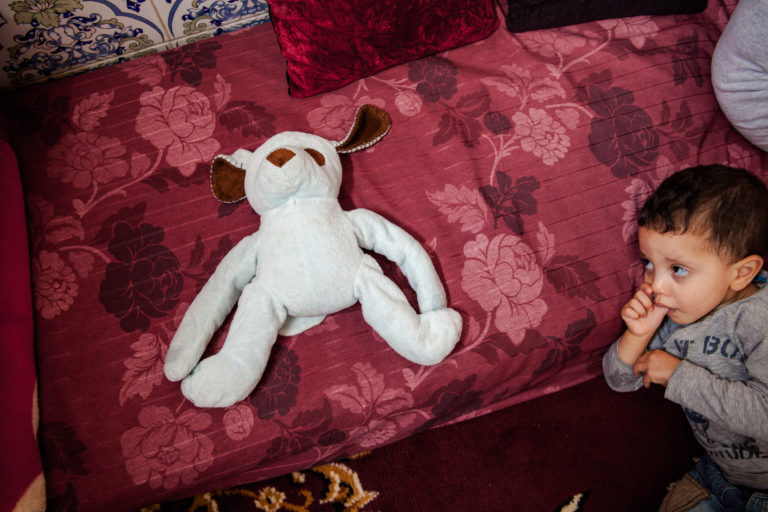
In Morocco, becoming a mother outside marriage often means having to hide.
Pregnancy can expose women to rejection by their families, abandonment by the child’s father, social and religious condemnation, and prosecution for sexual relations outside marriage. Some have been raped. Others believed in a promise of marriage before being abandoned, or were joined to a man through a customary marriage without an official certificate.
Many conceal their pregnancies for as long as possible before leaving their homes to escape judgement or violence. Isolated, without resources and sometimes still minors, some find themselves homeless at the very moment they are about to become mothers. Despite reforms to Morocco’s Family Code, the weight of the taboo continues to marginalise both women and their children.
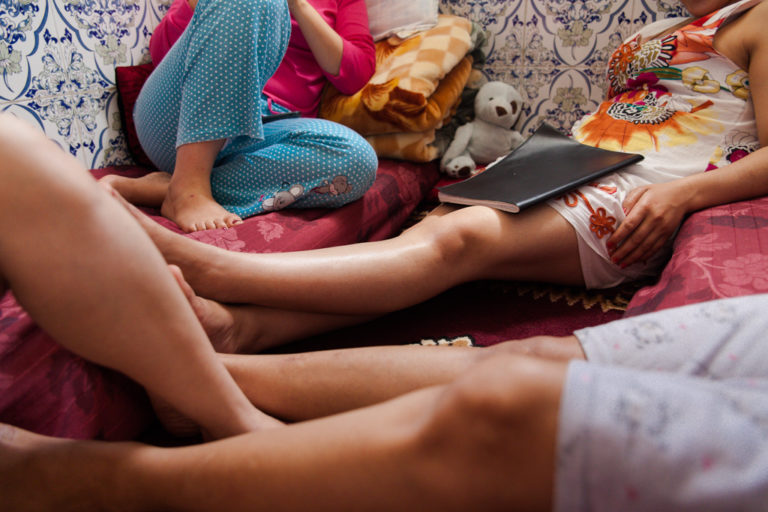
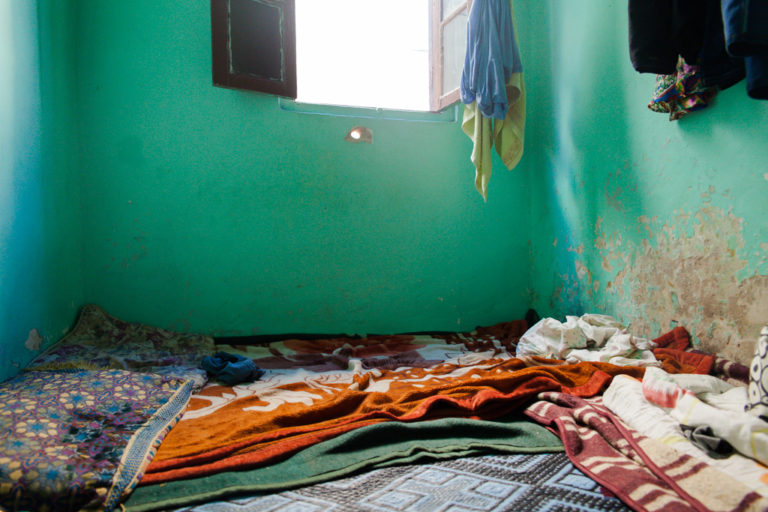
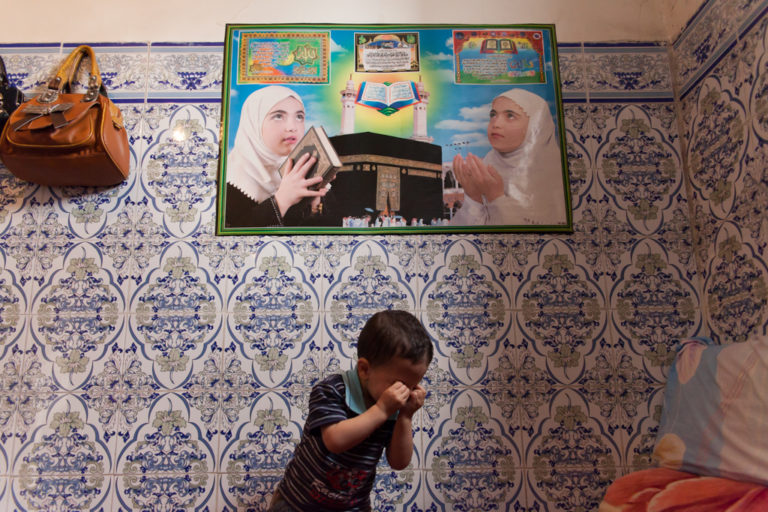
I chose to make the entire project in huis clos. The rooms in which these women lived were not simply backgrounds; they embodied their social and emotional confinement. The outside world never appears in the images, yet its pressure is present everywhere: in fragmented bodies, worn walls, makeshift sleeping spaces, absent figures and the fragile places the mothers try to make their own.
My Taboo Child does not seek to reduce these women to the label of “single mothers.” It attempts to reveal what that category conceals: young women facing abandonment, fear, poverty and rejection, but also attachment, dignity and the determination to build a life with their children.
H.
In H., vulnerability takes the form of anger.
She says she is prepared to do anything to give her child a father.
Engaged to a man forty years her senior, she initially considers terminating her pregnancy,
but later changes her mind. With the help of a relative, she runs away from the family home.
“My father would have killed me if he had found out about the pregnancy at the time.
Now that he knows about my situation, he refuses to see my child until I find him a father.”
H. is training in hairdressing and beauty care, but her professional life remains uncertain.
Fear, anger and a profound sense of injustice still occupy an immense place in her daily life.
Deeply affected psychologically, she eventually ends our exchanges. I never meet her child.
That absence is also part of her story.
B.
B. does not go unnoticed. Barely out of adolescence, always elegant and carefully made up,
she has the delicate appearance of a doll.
When she becomes pregnant, the father refuses to acknowledge either her or the child.
Convinced that her own family would disown her if they discovered the truth,
she leaves her hometown and moves to Casablanca. Pregnant and homeless,
she was taken in by an association.
When we met, she was nearing the end of her training and beginning to develop professional plans.
She shares a five-square-meter room with her son and another single mother in a working-class
neighborhood of Casablanca. There is neither a kitchen nor a bathroom.
And yet, within this tiny space, she is trying to build something that belongs to her.
F.
When F. approaches me, I first saw a very young woman deeply attached to her son.
She is the youngest and the most vulnerable of the three mothers.
Joined to a man through a customary marriage without an official certificate,
she was sent back to her family home when he learned of her pregnancy.
He refused to acknowledge the child.
Accused of adultery and overwhelmed by prejudice, F. left her home village
and finds refuge in an association in Casablanca. For two years, the organisation negotiated
with the father until he finally agrees to recognize his son.
But this recognition does not bring an end to her precarious situation.
F. still lives alone with her child in a dilapidated room in a poor neighborhood.
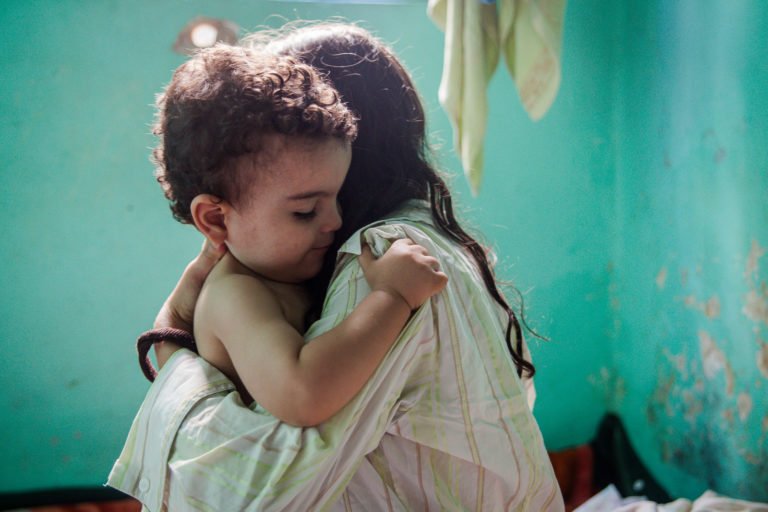
Between them, I observe an almost constant closeness:
a way of holding one another, looking at one another and protecting one another,
as though their bond had become their only truly safe space.
A documentary photographer project by Zara Samiry, a Moroccan photographer and writer working on identity, memory and women’s experiences.